
How to plan your day without overloading it
A simple daily planning workflow for choosing priorities, protecting focus time, and ending the day with less unfinished mental clutter.
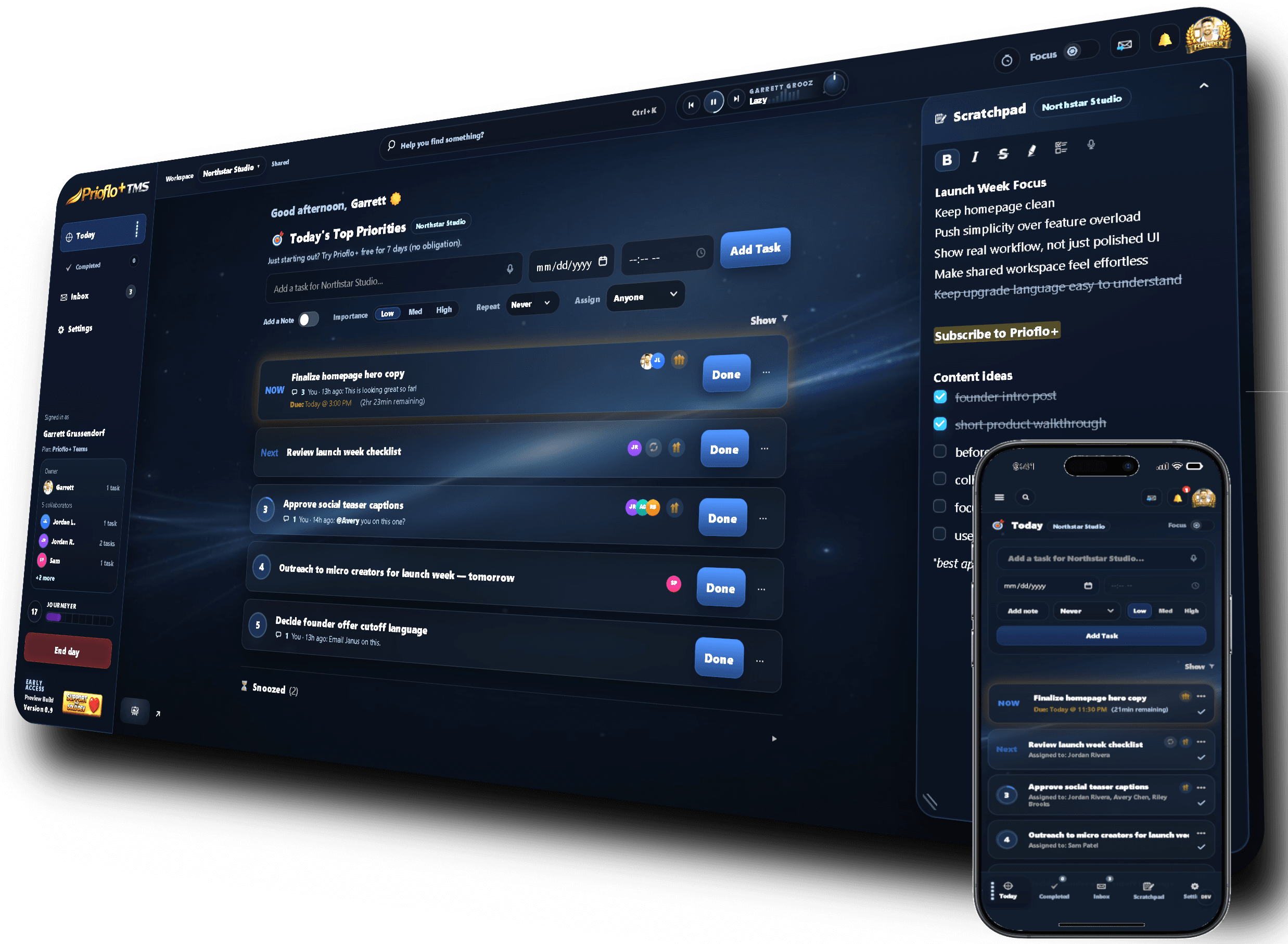
Plan your day by capturing tasks, choosing a small set of real priorities, assigning focus time to the work that matters, and leaving room for interruptions. A good daily plan should make the next action easier, not make the day feel packed.
A simple workflow you can actually follow
Empty your head first
Write down tasks, reminders, and loose ideas before deciding what belongs in the day. This makes the planning step calmer and more complete.
Choose today’s real priorities
Pick the tasks that need attention now. Leave nice-to-have work in Inbox so the day does not become overloaded before it starts.
Pair priorities with focus blocks
The most important work needs protected attention. Use a timer, music, ambience, or a focus mode to help create a work session around the task.
Review and reset at the end
Close the day by checking what was completed, what was marked done, and what needs to move forward tomorrow.
A useful daily plan is smaller than your full task list
A daily plan should not be a copy of everything you need to do eventually. It should be the clearest version of what deserves attention today. That makes it easier to start and easier to know when the day was successful.
- Capture everything in one place.
- Move only today-relevant work into the main view.
- Keep tomorrow and later from crowding today.
Leave space for reality
Overpacked plans break fast. A realistic plan leaves room for messages, delays, and unexpected work while still protecting a few important tasks.
How Prioflo helps daily planning feel lighter
Prioflo combines Today, Inbox, Daily Objectives, focus tools, and reporting so the planning loop stays simple. You can capture quickly, decide what matters, focus on it, and finish with a recap instead of manually rebuilding the plan every day.
Practical questions before you try it
What should a daily plan include?
A daily plan should include the few tasks that matter today, any time-sensitive work, and a realistic amount of focus time. It should not include every task you can think of.
When should I plan my day?
Many people do best planning near the start of the workday, then reviewing at the end. The exact time matters less than keeping the plan small and useful.
Why do daily plans fail?
Daily plans usually fail because they are too crowded, too vague, or disconnected from actual focus time. A good plan makes starting easier.
Keep building a calmer workflow
These guides connect planning, prioritization, and focus into one practical system.